
Because several conditions can produce similar symptoms, a dry eye evaluation is important before deciding which treatment is appropriate.
How OptiLight IPL Approaches Dry Eye Differently
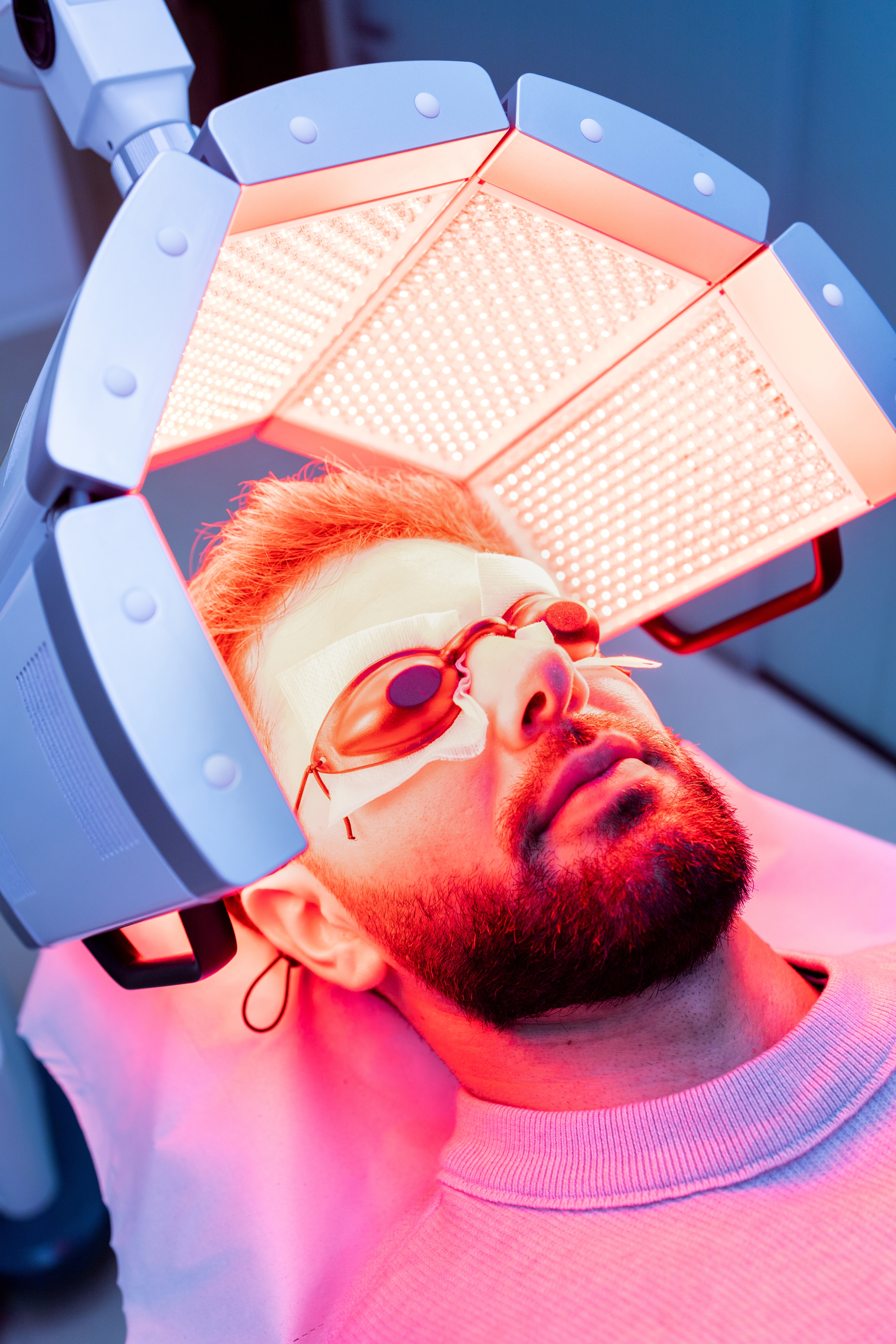
OptiLight uses intense pulsed light, or IPL, applied to the skin around the eyes according to a controlled treatment protocol. It is designed for appropriate patients with dry eye associated with meibomian gland dysfunction.
IPL treatment targets abnormal blood vessels and inflammatory processes that can contribute to chronic eyelid inflammation. Reducing this inflammatory environment may help the meibomian glands function more effectively and improve tear film stability.
This is different from artificial tears. Lubricating drops replace or supplement moisture temporarily, while IPL is intended to address factors contributing to evaporative dry eye.
Patients typically require a series of treatments rather than a single appointment. Candidacy also depends on individual eye health, skin characteristics, symptoms, and the specific cause of dry eye.
Why Treating the Glands Matters
Blocked meibomian glands can gradually become less effective if dysfunction continues. For Fort Bend County patients with persistent MGD, treatment strategies often focus on improving the quality and flow of the oils produced by these glands.
This may involve heat, gland expression, light-based therapy, eyelid treatment, or a combination of approaches. The goal is to improve the tear film instead of continually responding to symptoms after they appear.
Optiqueye in Missouri City offers several technologies aimed at the underlying causes of dry eye, including Low Level Light Treatment, iLux, MiBo Thermoflo, and TempSure Envi. The appropriate treatment depends on what an examination reveals about your tear film, eyelids, and meibomian gland function.
A Personalized Dry Eye Plan Matters
Not every case of dry eye is caused by MGD. Some patients do not produce enough tears, while others lose tears too quickly through drainage. Allergies, medications, screen use, environmental exposure, blepharitis, and other factors may also contribute.
That is why simply choosing a treatment based on symptoms can lead to temporary or incomplete relief. A detailed dry eye evaluation allows your eye doctor to determine which part of the tear system is not functioning properly and recommend treatment accordingly.
For Missouri City and Fort Bend County patients struggling with ongoing burning, redness, fluctuating vision, or irritation, schedule a dry eye evaluation with Optiqueye at 6144 Sienna Ranch Rd., Suite 600, Missouri City, TX 77459, or call (832) 947-5857 to explore a personalized approach to healthier, more comfortable eyes.
' != ''" >Chronic dry eye is not always caused by a simple lack of tears. For many patients, the real problem involves inflammation and meibomian gland dysfunction, or MGD. When these tiny oil-producing glands along the eyelids become blocked or dysfunctional, tears evaporate too quickly and the eyes can remain irritated despite frequent use of artificial tears.
For patients throughout Fort Bend County and Missouri City, understanding the cause of dry eye is an important first step toward finding lasting relief. Treatments such as OptiLight IPL are designed to address some of the underlying factors associated with evaporative dry eye rather than simply adding temporary moisture to the eye's surface.
Why Meibomian Gland Dysfunction Causes Chronic Dry Eye
Healthy tears have multiple layers, including an oily outer layer produced by the meibomian glands. This oil slows evaporation and helps keep the tear film stable between blinks.
When the glands become clogged or the oils become thick and unhealthy, tears can evaporate more rapidly. The result may be persistent burning, fluctuating vision, redness, or a gritty sensation.
Signs of chronic dry eye may include:
- Burning or stinging eyes
- Grittiness or a foreign-body sensation
- Watery eyes despite feeling dry
- Redness and irritation
- Blurry vision that changes after blinking
- Contact lens discomfort
- Symptoms that repeatedly return after using artificial tears
Because several conditions can produce similar symptoms, a dry eye evaluation is important before deciding which treatment is appropriate.
How OptiLight IPL Approaches Dry Eye Differently
OptiLight uses intense pulsed light, or IPL, applied to the skin around the eyes according to a controlled treatment protocol. It is designed for appropriate patients with dry eye associated with meibomian gland dysfunction.
IPL treatment targets abnormal blood vessels and inflammatory processes that can contribute to chronic eyelid inflammation. Reducing this inflammatory environment may help the meibomian glands function more effectively and improve tear film stability.
This is different from artificial tears. Lubricating drops replace or supplement moisture temporarily, while IPL is intended to address factors contributing to evaporative dry eye.
Patients typically require a series of treatments rather than a single appointment. Candidacy also depends on individual eye health, skin characteristics, symptoms, and the specific cause of dry eye.
Why Treating the Glands Matters
Blocked meibomian glands can gradually become less effective if dysfunction continues. For Fort Bend County patients with persistent MGD, treatment strategies often focus on improving the quality and flow of the oils produced by these glands.
This may involve heat, gland expression, light-based therapy, eyelid treatment, or a combination of approaches. The goal is to improve the tear film instead of continually responding to symptoms after they appear.
Optiqueye in Missouri City offers several technologies aimed at the underlying causes of dry eye, including Low Level Light Treatment, iLux, MiBo Thermoflo, and TempSure Envi. The appropriate treatment depends on what an examination reveals about your tear film, eyelids, and meibomian gland function.
A Personalized Dry Eye Plan Matters
Not every case of dry eye is caused by MGD. Some patients do not produce enough tears, while others lose tears too quickly through drainage. Allergies, medications, screen use, environmental exposure, blepharitis, and other factors may also contribute.
That is why simply choosing a treatment based on symptoms can lead to temporary or incomplete relief. A detailed dry eye evaluation allows your eye doctor to determine which part of the tear system is not functioning properly and recommend treatment accordingly.
For Missouri City and Fort Bend County patients struggling with ongoing burning, redness, fluctuating vision, or irritation, schedule a dry eye evaluation with Optiqueye at 6144 Sienna Ranch Rd., Suite 600, Missouri City, TX 77459, or call (832) 947-5857 to explore a personalized approach to healthier, more comfortable eyes.